Tina Hansen · 9 October 2026
Balancing Automation and Human Oversight: Operational Insights from Standalone Digital Platforms
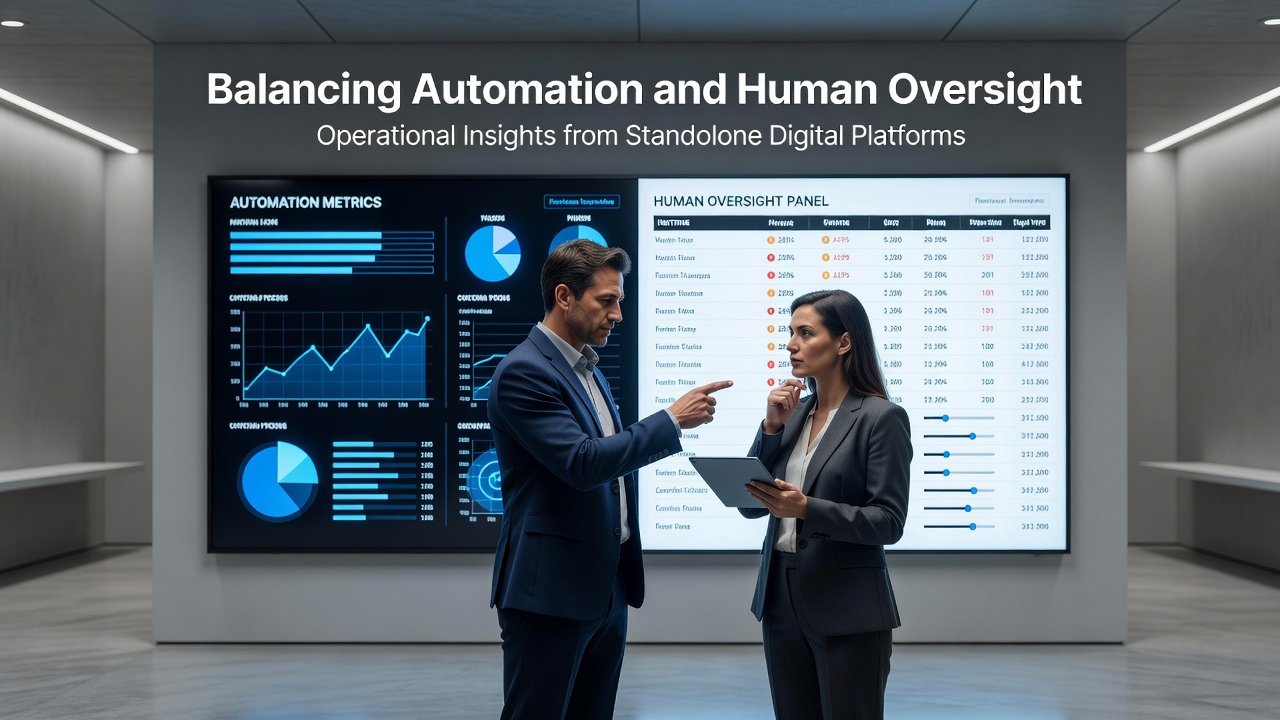
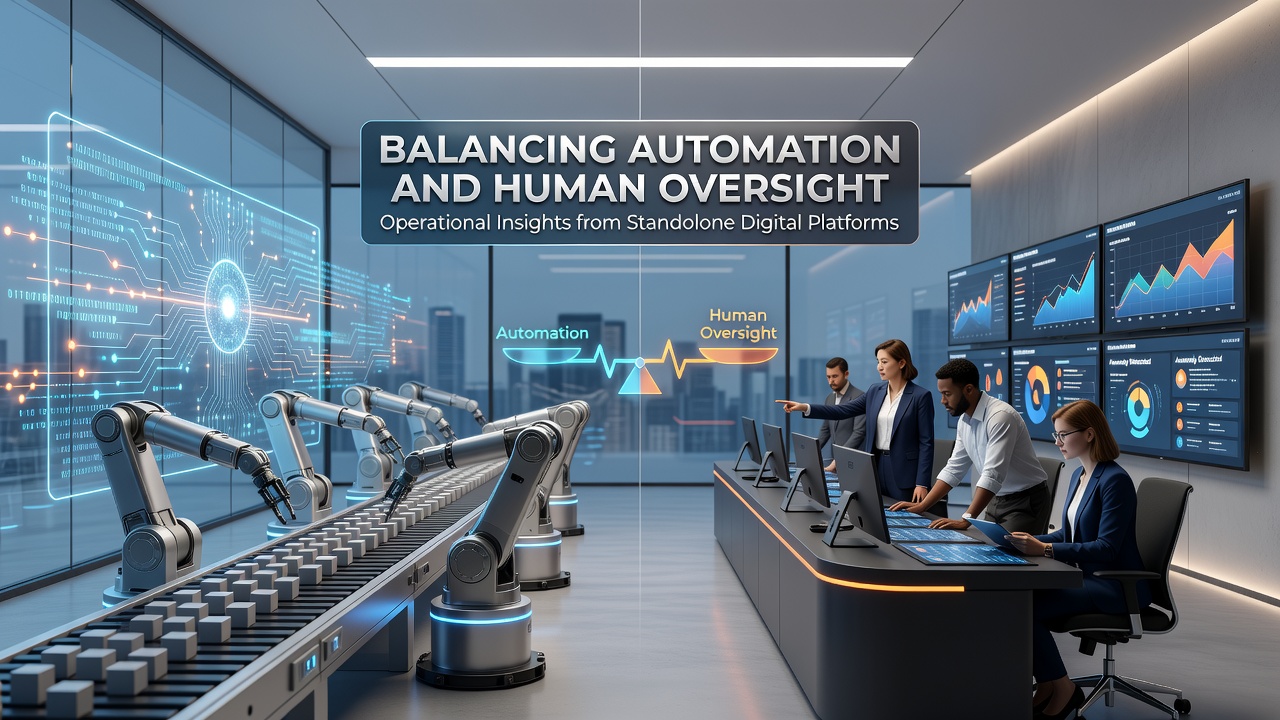
Standalone digital platforms operate independently from major corporate ecosystems, and they rely on a mix of automated systems and human intervention to manage daily operations, data processing, and user interactions. Automation handles repetitive tasks such as content scheduling, basic analytics tracking, and transaction logging, while human oversight steps in for nuanced decisions involving content quality, user disputes, and regulatory compliance. Data from industry reports indicates that platforms using this hybrid approach achieve up to 35 percent higher operational uptime compared to fully automated setups, according to findings published by the OECD in recent digital economy assessments.
Core Components of Automation in Independent Platforms
Automation tools in these environments include rule-based scripts for inventory updates, machine learning models for spam detection, and API integrations that sync user data across services without manual input. Researchers at the University of Toronto documented how such systems reduce processing times for routine queries by 60 percent in mid-sized platforms, allowing teams to redirect resources toward strategic growth. Yet the same studies highlight that automation alone struggles with edge cases, like interpreting cultural context in user-generated content or adapting to sudden regulatory shifts.
Human Oversight Mechanisms and Their Integration Points
Human operators typically review automated outputs at defined checkpoints, such as approving flagged content or validating financial reconciliations. In practice, teams establish escalation protocols where algorithms route complex issues to specialists within minutes, maintaining service continuity. Evidence from the Australian Competition and Consumer Commission shows that platforms incorporating regular human audits experience 22 percent fewer compliance incidents over a 12-month period, particularly in sectors handling personal data. Observers note that these checkpoints often occur at key stages like post-upload moderation and pre-launch testing, creating a layered defense against errors that pure automation might miss.
Operational Data Patterns Observed in 2026
By October 2026, analytics platforms tracking standalone sites reported that hybrid models processed an average of 1.2 million daily transactions with human review applied to just 4 percent of cases. This selective oversight focused on high-risk categories, including payment anomalies and content violations, while routine operations ran autonomously. Figures from the European Commission's digital single market reports reveal similar trends across EU-based independent platforms, where AI-driven monitoring combined with quarterly human reviews correlated with improved user retention rates. Those who've implemented such frameworks often discover that real-time dashboards provide the visibility needed to adjust oversight thresholds dynamically.
Case Examples from Platform Operations
One independent e-commerce site based in Canada integrated automated recommendation engines with human-curated product categories, resulting in a documented 18 percent increase in conversion rates over six months, per internal metrics shared with industry analysts. Another content platform in New Zealand applied machine learning for initial tagging of articles but required editors to verify metadata accuracy before publication, which reduced indexing errors by nearly half according to follow-up audits. These examples illustrate how geographic and operational diversity influences the balance point between automated speed and human judgment.
Challenges in Maintaining Effective Balance
Scalability presents ongoing difficulties because growing transaction volumes can overwhelm review queues if human capacity does not expand proportionally. Technical teams address this through predictive staffing models that forecast peak periods and allocate reviewer time accordingly. Data indicates that platforms failing to recalibrate oversight ratios experience bottlenecks, with average resolution times extending by 40 percent during high-traffic events. What's interesting is how external factors like evolving data protection standards require periodic recalibration of both automated rules and human review criteria to stay aligned.
Measurement Frameworks and Performance Indicators
Operators track metrics such as automation coverage percentage, human intervention frequency, and error resolution speed to evaluate system health. Research from the National Institute of Standards and Technology outlines standardized benchmarks for these indicators, emphasizing the value of longitudinal tracking over isolated snapshots. Standalone platforms that adopt these frameworks report clearer visibility into cost efficiencies, with some noting reductions in operational overhead of 15 to 25 percent after the first year of refined oversight protocols. And because these measurements integrate both quantitative logs and qualitative feedback from review teams, they support iterative improvements without disrupting core functions.
Conclusion
Standalone digital platforms continue to refine the interplay between automated processes and human oversight as operational demands evolve. Data from multiple regulatory and research sources demonstrates measurable gains in efficiency, compliance, and user satisfaction when the two elements work in tandem. Those managing such systems benefit from ongoing analysis of performance indicators and selective application of human review at critical junctures, ensuring resilience across varying scales and regulatory landscapes.